
By Rev. Bright Mawuena Nfodzo
SCRIPTURE 📖
1 In those days, as the number of the disciples was growing larger and larger, a complaint was made by the Hellenistic Jews against the Hebraic Jews that their widows were being neglected in the daily distribution of food.
2 So the Twelve called the whole group of disciples together and said, “It is not desirable for us to neglect messages from God in order to wait on tables.
3 Therefore, brothers, appoint seven men among you who have a good reputation, who are full of the Spirit and wisdom, and we’ll put them in charge of this work.
4 Then we’ll devote ourselves to prayer and to the ministry of the word.”
5 This suggestion pleased the whole group. So they chose Stephen, a man full of faith and the Holy Spirit, Philip, Prochorus, Nicanor, Timon, Parmenas, and Nicolaus, a gentile convert to Judaism from Antioch.
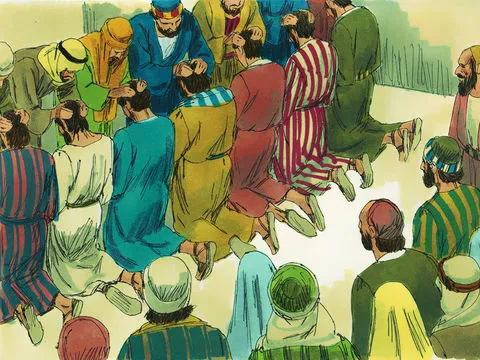
6 They had these men stand before the apostles, who prayed and laid their hands on them.
7 So the word of God continued to spread, and the number of disciples in Jerusalem continued to grow rapidly. Even a large number of priests became obedient to the faith.
8 Now Stephen, full of grace and power, was performing great wonders and signs among the people.
BACKGROUND ✝
In the first Church were two groups of Jews; Hellenistic Jews who spoke Greek and Hebraic Jews who spoke Hebrew.
1. The Hellenistic Jews had come from different countries. Many such Jews had been born in foreign countries. Their ancestors had also lived far away from Israel. So, they did not know how to speak Hebrew. They spoke Greek because it was the most common language. Probably, they also thought like Greeks and they behaved like Greeks.
2. The Hebraic Jews spoke Hebrew, the Jews’ language and they were very proud of Jewish traditions. They lived in Jerusalem and the areas around it.
The church was growing quickly. Soon there was a problem between the two groups of Jews. It was an argument about the Jewish custom to help widows. (See Exodus 22:22 and Deuteronomy 10:18)
Women whose husbands had died did not have a regular income. So, in the first church, they continued the custom to help them. People donated to be used to help these people. Every day they gave something to the widows among them. They gave them whatever they needed. But the Jews who spoke Greek complained. They complained that the Hebrew widows were receiving more than the other widows. Perhaps the two groups did not like each other much. Or perhaps they did not trust each other much. Perhaps that was why they quarreled.
The 12 apostles realized that this small problem might become much bigger. They did not have time to organize practical matters. They needed time to preach. Jesus had told His 12 disciples that their work was to preach. If they did not do this, the church would not grow bigger. They knew that they must do something about this problem quickly.
But the 12 apostles did not just tell everyone what to do. Instead, they ‘called the whole group of believers together’. They told the whole church about the problem.
To ensure that the daily distribution of food was handled fairly and in the right spirit, the apostles invited the church to choose seven suitable men, whom the apostles then appointed to look after the work (verses 2-6).
With the appointment of these men, the apostles took the first steps toward the organization of the church.
Stephen was a Jew who spoke Greek. He was one of the 7 helpers. His job was to give food to the poor believers. God was showing His truth and power by means of Stephen. God can use us in any way that He wants. He can use us even when we are doing a practical job, like Stephen.
LESSONS✍🏽
🔷 Christian leaders must always be chosen prayerfully and thoughtfully
🔷 Leaders must always be proactive and take immediate steps to stop minor problems from aggravating
🔷 Delegation and supervision are good attitudes that Christian leaders must exhibit, since make everyone involved in the activities of the Church and promote cohesion and progression.
PRAYER POINTS🙏🏽
💥 Pray for peace in the Church
💥 Ask that God will always appoint leaders for His people
CONCLUSION📙
The Church must be a place of no discrimination or favoritism, but a place where God shows that people meet God.
AMEN